
Case Studies.
Showing 9 of 9
Lupus: On Treatment, Still Waiting for Relief
KEEP heard from 31 people with confirmed lupus between September and October 2026. Treatment is common but relief is not: 77% use a prescription treatment, yet 75% of them describe partial, poor, or no control, and 96% experience disruption daily or several times a week. Effectiveness leads their challenges, and 87% are very interested in other therapies or research. The report shows how to build support around the relief patients still need.
Neurofibromatosis Type 1: Connected to Care, Still Translating the Condition
KEEP heard from 109 people with a doctor-confirmed NF1 diagnosis between May and October 2026. Most are connected to care, yet the work of understanding NF1 follows them home: 81% name a clinician involved in their care, but 61% of that group say most people do not understand what they live with. Risk and visibility shape daily life, with 62% worried their neurofibromas may become cancerous. The report shows how to support the interpretation work patients already do.
Low Testosterone: The Delivery Experience Is Not Settled
KEEP heard from 35 people with confirmed low testosterone in June 2026, most currently on prescription TRT. The therapy is familiar, but the delivery experience is not settled. 58% rate their delivery method okay or worse, and 54% report friction in dosing, travel, or discretion. Ease of use leads what patients value, and 89% make evidence-led decisions. The report shows how brands can compete on the experience of taking treatment.
LGS and Dravet Syndrome: Experienced Caregivers Are Still Searching
KEEP learned from caregivers representing 57 people with LGS or Dravet syndrome between April and June 2026. These are experienced caregivers still searching for answers: 98% have tried multiple medications, yet 74% say seizures remain poorly controlled and 46% feel they have run out of options. Caregiving runs around the clock, and 72% are very interested in new options. The report shows how to meet caregivers as experienced partners.
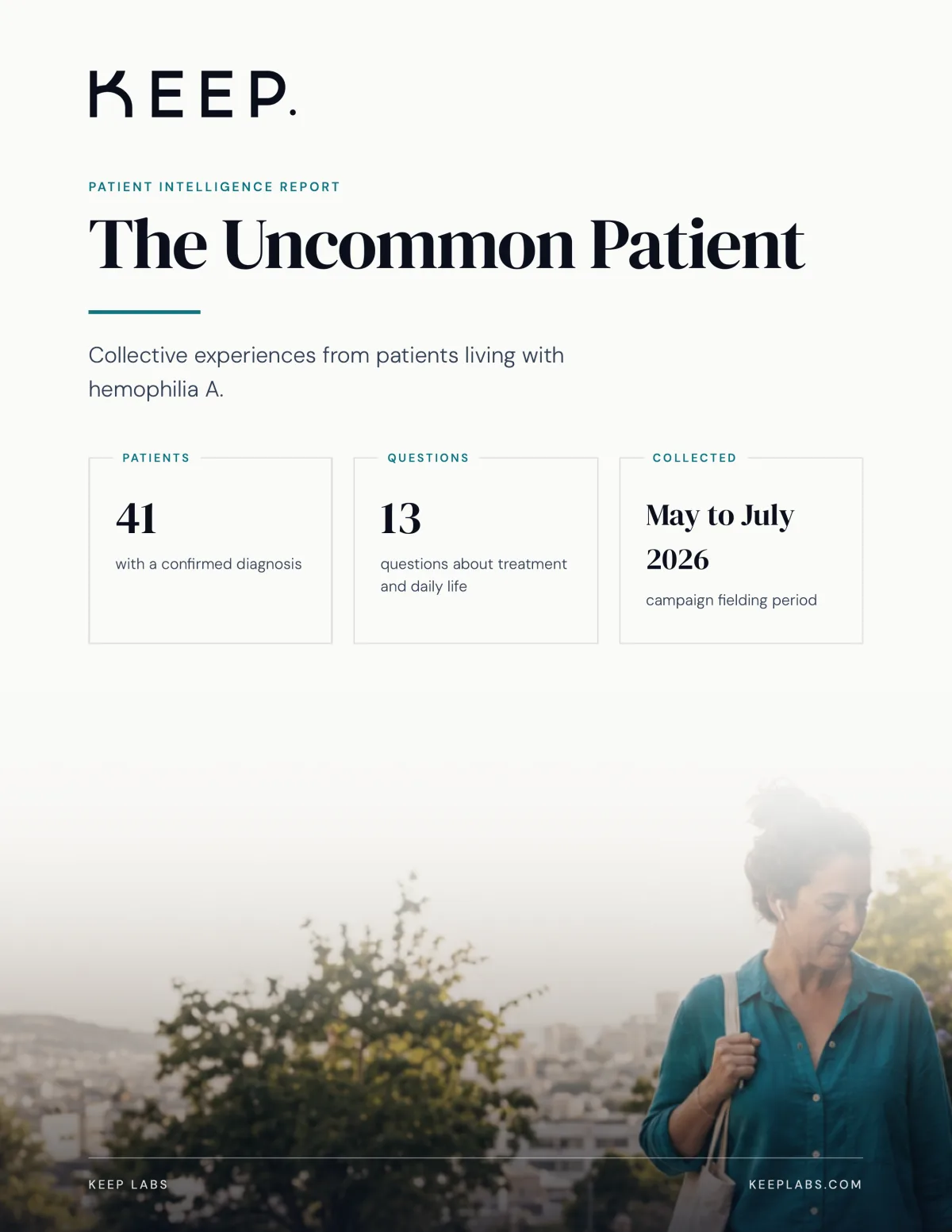
Hemophilia A: Controlled Is Not the Same as Unburdened
KEEP heard from 41 adults with confirmed hemophilia A between May and July 2026. The core finding is a gap between clinical control and lived burden. 78% of medicated patients report good control, yet 46% still plan activities around bleed risk, and 44% are not on a prescribed medication at all. Interest in new options is near-universal at 95%. The report shows brand teams how to engage stable, evidence-led patients between treatment decisions.
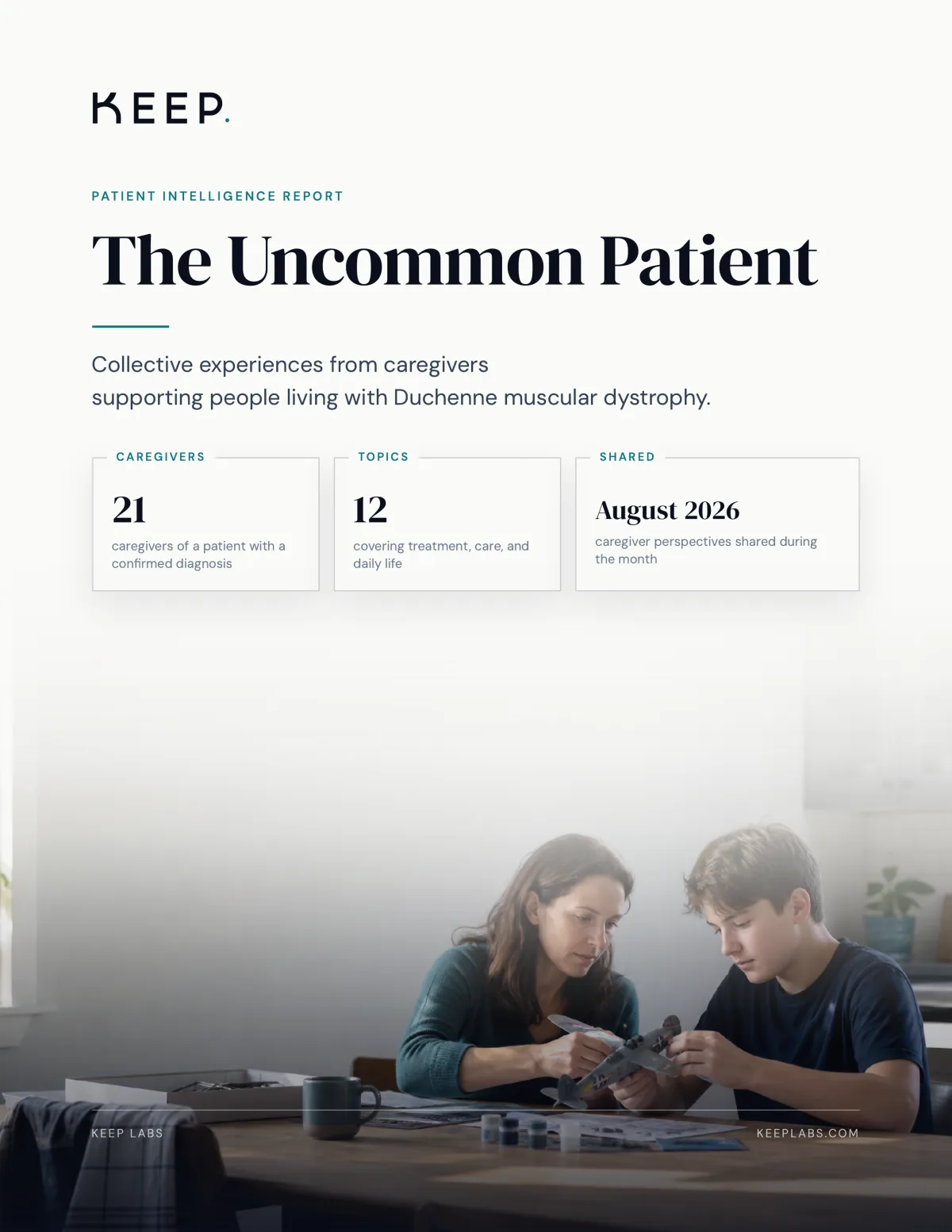
Duchenne Muscular Dystrophy: Managing Today While Looking Ahead
KEEP heard from 21 caregivers of people with confirmed Duchenne muscular dystrophy in August 2026. This is an experienced audience with deep genetic and treatment knowledge, yet treatment has not settled the decision. Every caregiver whose patient takes medication is concerned about long-term steroid side effects, and 95% are very interested in other therapies. Most sit outside advocacy groups. The report shows how to engage caregivers as experienced decision partners.
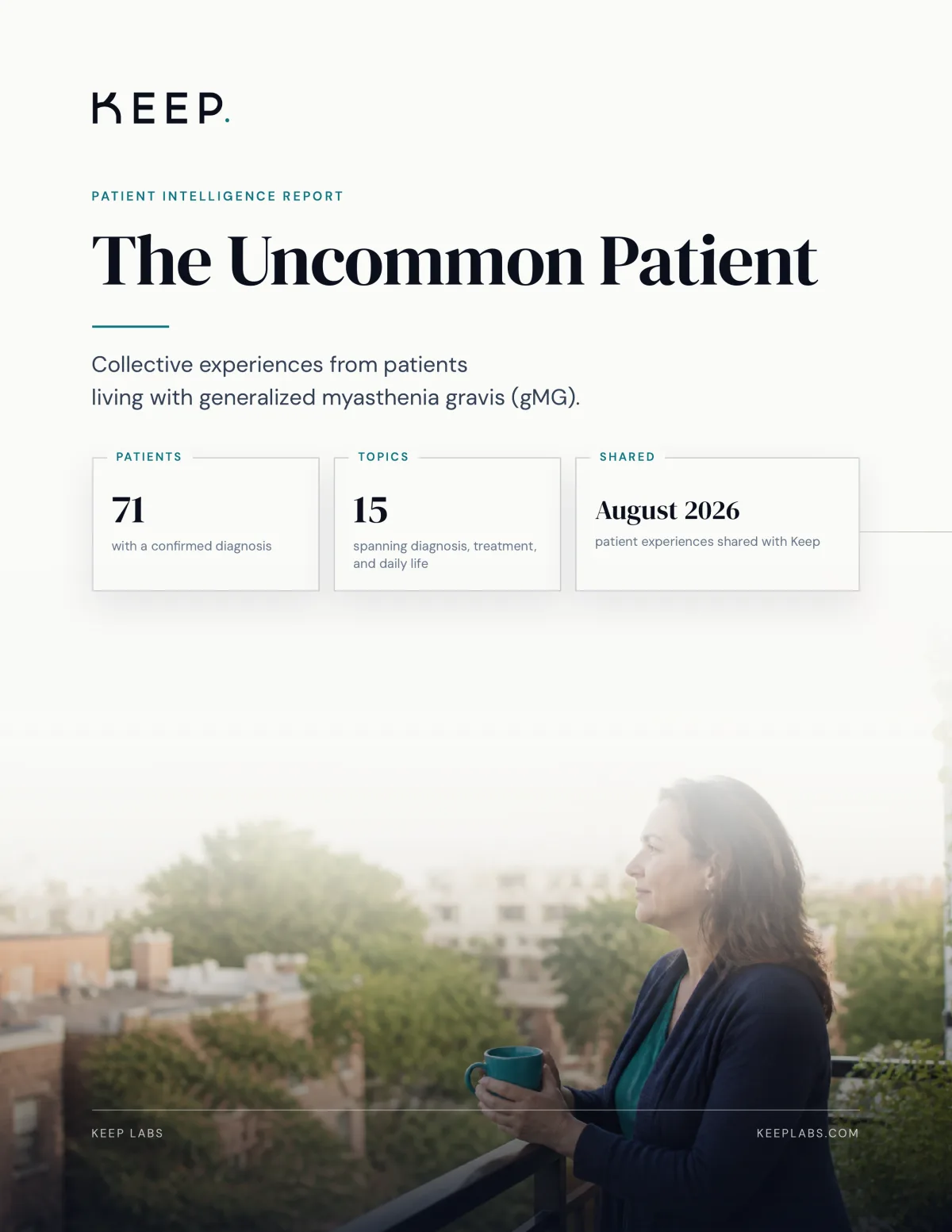
Generalized Myasthenia Gravis: Treated, but Still Navigating What Comes Next
KEEP learned from 71 people with confirmed generalized myasthenia gravis in August 2026. Treatment is widespread but control is not: 92% take medication, yet 89% of them describe control as partial or worse, and 94% are limited by weakness or fatigue most weeks. Reassessment is already underway, with 63% discussing a treatment change in the past year. The report shows how to support patients already considering change.
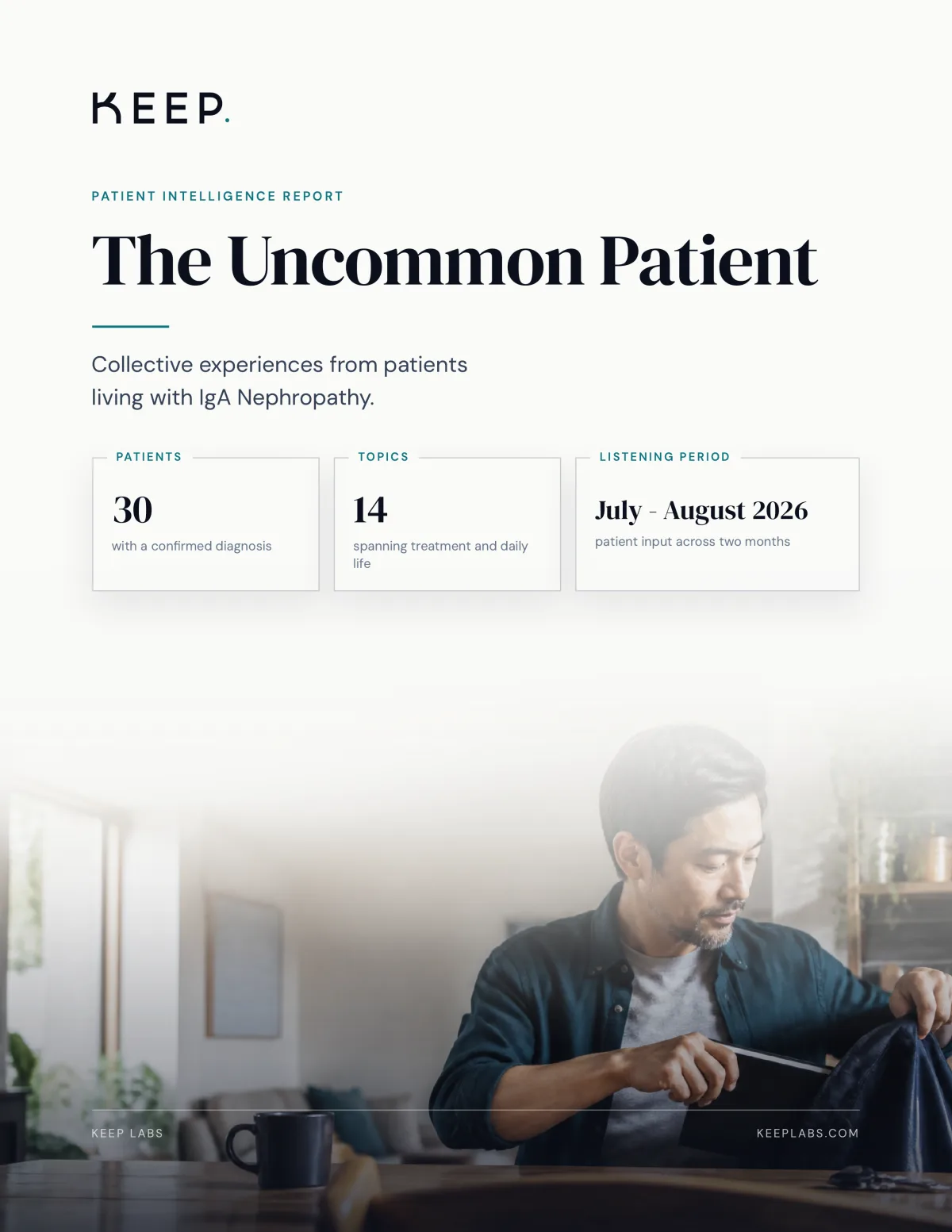
IgA Nephropathy: Ready to Learn, Largely Outside Formal Support
KEEP heard from 30 people with confirmed IgA nephropathy in July and August 2026. Monitoring is common but control is not: 57% track kidney function regularly, yet 53% describe their condition as poorly or not controlled. Every patient expressed interest in other therapies, but 87% are not engaged with an advocacy group, so formal channels miss most of this audience. The report shows how to reach a motivated audience with credible next steps.
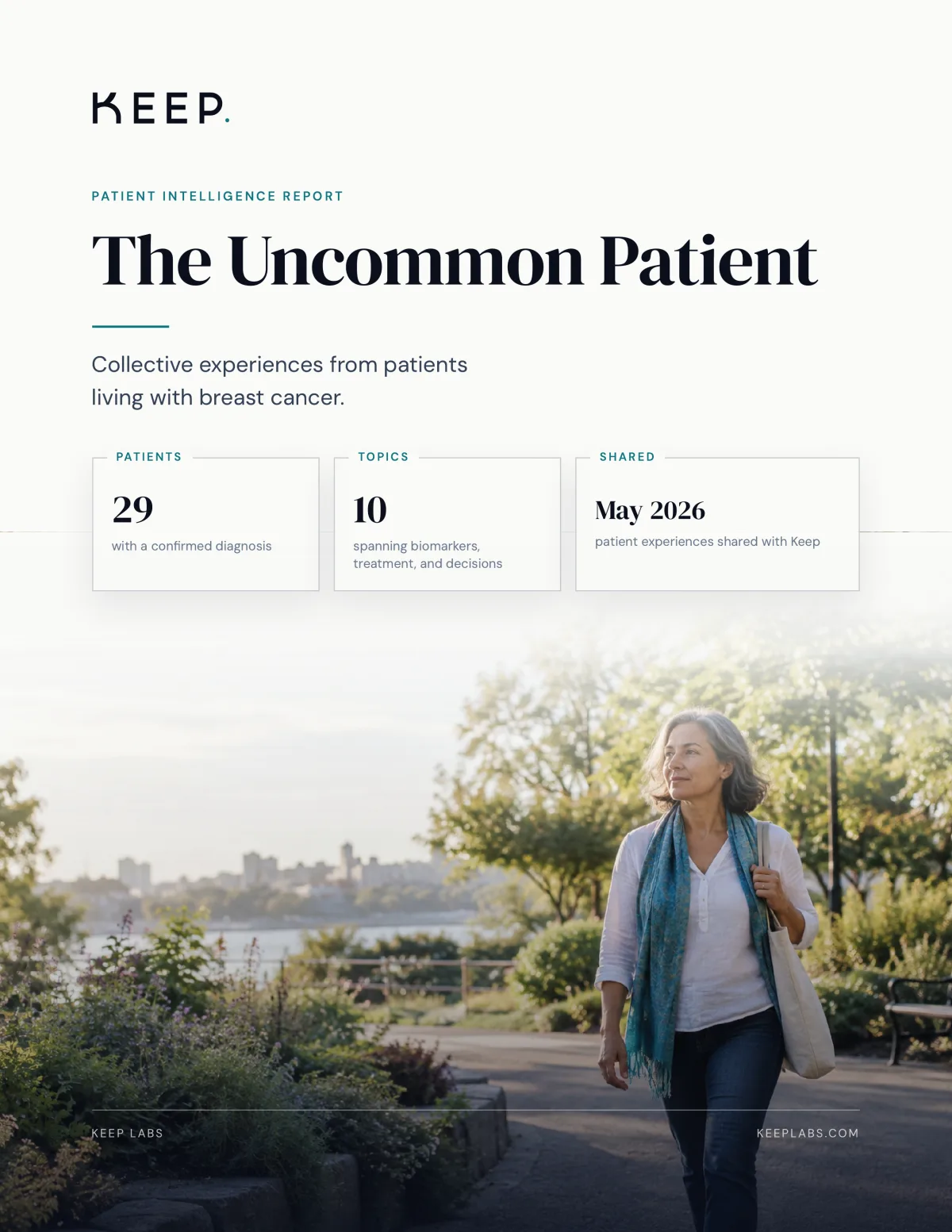
HER2 Breast Cancer: Treatment Confidence Starts with Clarity
KEEP learned from 29 people with confirmed breast cancer in May 2026, many close to a treatment decision. The defining tension is biomarker clarity: 52% had no confirmed HER2 test in the past year, and 41% could not report a clear HER2 status. Patients want decision confidence, not more information, with 66% focused on confirming they are on the right treatment. The report outlines how to build a clear path from status to decision.